Origins & 1960s
- The company was founded in 1961 under the name RotorWay Aircraft by B. J. Schramm in Chandler, Arizona, USA. Wikipedia+2Rotorway UK+2
- Schramm initially built a prototype called the “Javelin” using a motorcycle engine (~40 hp) around 1961. Rotorway UK+1
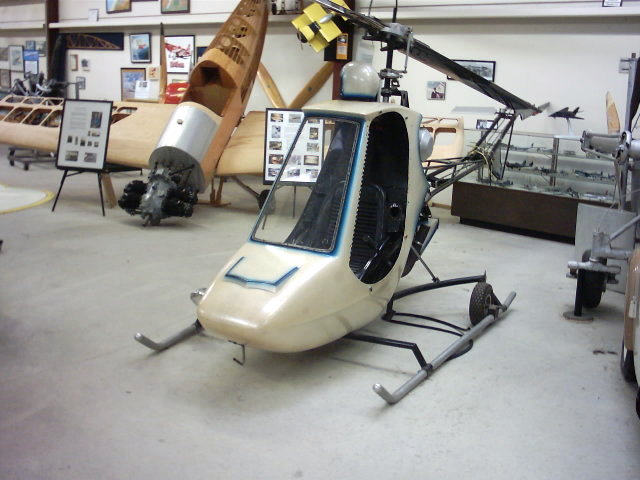
- The first production-kit helicopter was the RotorWay Scorpion (1967). It was aimed at the sport-flying public and sold as a kit. Wikipedia+1
- This was significant: one of the earliest kit-helicopter offerings. The Scorpion evolved through variants. Wikipedia+1
1970s
- The Scorpion series expanded. The two-seater version, the Scorpion II (or “Scorpion Too”), appeared around 1971. Wikipedia+1
- In 1974 they developed their own four-cycle engine (the RW133) when they couldn’t get a suitable 4-cycle from other manufacturers. The Scorpion 133 used that engine. Wikipedia+1
- Over the decade, RotorWay built its reputation as a maker of home-built helicopter kits (rather than full certified production helicopters).
1980s
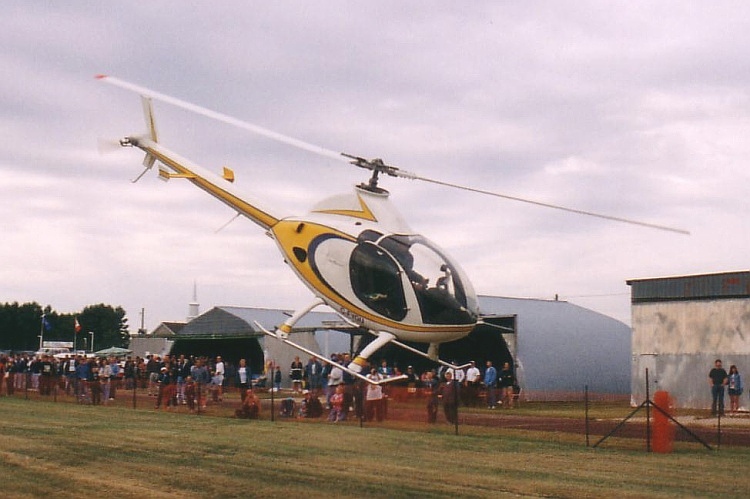
- In 1980 the company introduced the RotorWay Exec (Executive) and a new engine (RW145). The Exec had a more “finished” look compared to earlier open-frame kits. Wikipedia
- In 1982 they introduced asymmetrical rotor blades, enabling higher altitude performance (but with certain risks in autorotation). Wikipedia+1
- The company however faced financial difficulties in the late 1980s. From the “Kit Copter” article: by 1995 the earlier company had gone out of business and assets had been purchased. aopa.org
1990s: Re-organization & New Ownership
- In 1990, RotorWay Aircraft underwent re-organization and changed its name to RotorWay International. Helis.com+1
- That year, British businessman John Netherwood (who had been a customer) purchased the assets of the failing company, rehired many workers, and restarted operations under the new name. aopa.org
- He introduced the Exec 90 and later the Exec 162F (mid-1990s) which featured more modern components: fuel injection, FADEC (full authority digital engine control), improved rotor blades and kit support. Rotorway UK+1
- The company moved into a new factory in Chandler (~1994) and improved its assembly/kit process. Rotorway UK
2000s & Later Developments
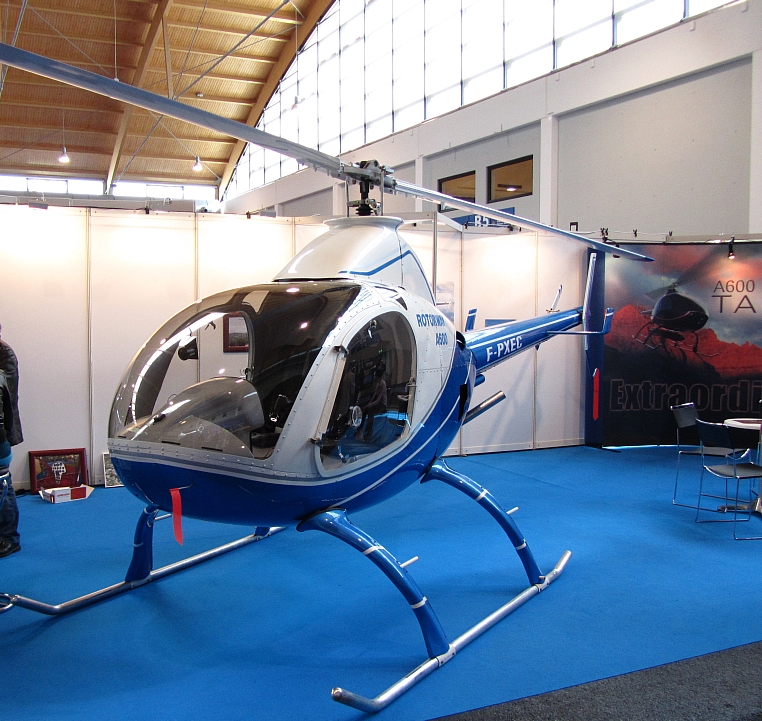
- In July 2007, RotorWay launched the RotorWay A600 Talon, a further improved two-seat kit helicopter, intended to modernize their lineup. Wikipedia+1
- In February 2009, RotorWay acquired PMC Machining & Manufacturing to bolster its manufacturing capability and to move toward certifying a two-seat turbine helicopter (with the Rolls-Royce RR300 engine). aopa.org
- The company claimed to be the oldest and largest kit-helicopter company in the world, with kits sold in over 50 countries. Rotorway UK+1
Ownership Changes & Fate
- In 2007 the upper-level management/investor group (Grant Norwitz, Bill Adams, Judy Craven) acquired RotorWay. flightmann.com+1
- In 2021, the company’s plant, designs and assets were purchased by a new company, Rotor X Aircraft Manufacturing Co., and RotorWay ceased business as such. aopa.org+1
Significance & Legacy
- RotorWay pioneered the “kit helicopter” market: giving amateur builders the ability to assemble their own helicopters. marketplace.aviationweek.com+1
- They manufactured many of their own critical components (engines, rotor systems) rather than sourcing everything externally — notable for a kit-manufacturer. rotorwaycanada.com
- Their technology improvements (FADEC, asymmetrical rotor blades, etc) show a movement toward more advanced amateur-builder helicopters.
- While they never achieved full certification (commercial production) of large numbers of helicopters, their presence in the home-built rotorcraft field was substantial.
Key Models Timeline
- 1961: Javelin prototype
- 1967: Scorpion (first production kit)
- 1971: Scorpion II (two-seat)
- 1980: Exec (new design)
- 1990: Exec 90 (redesigned)
- 1994: Exec 162F (modern iteration)
- 2007: A600 Talon (kit helicopter, two-seat)
- 2021: Assets transferred to Rotor X